01
San Blas Bay
A secluded Gozo bay below the tower, reached by a steep path through the surrounding countryside.
Explore San Blas →The last of Gozo’s historic coastal watchtowers, standing high above the rugged coastline between San Blas and Daħlet Qorrot.
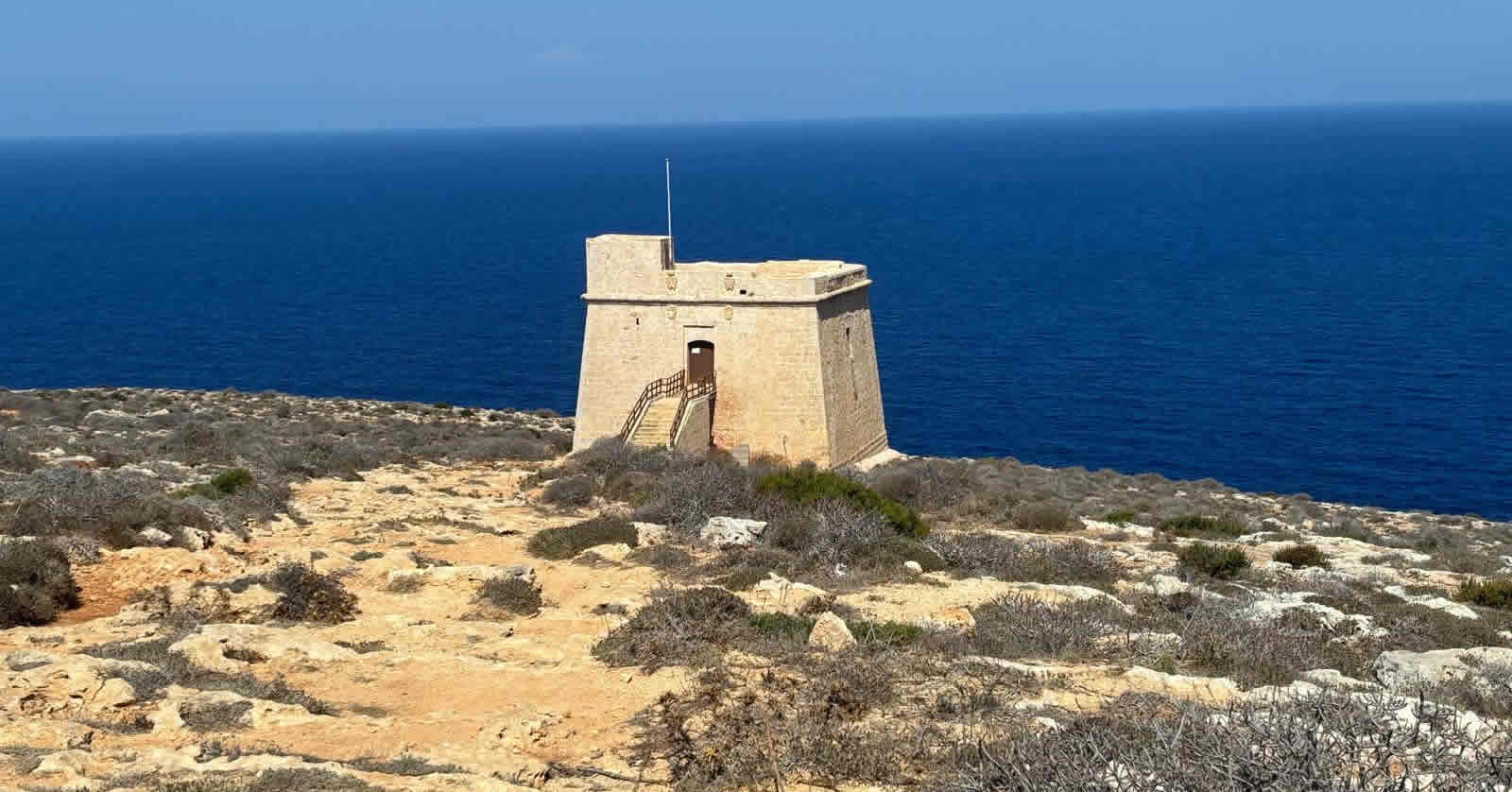
Ta’ Isopu Tower, also known as Sopu Tower, San Blas Tower and La Torre Nuova, stands on the high ground between San Blas Bay and Daħlet Qorrot in Nadur. Built in 1667 during the reign of Grand Master Nicolas Cotoner, it was the last coastal watchtower constructed by the Knights of St John on Gozo.
The tower occupied an important position above the northeastern coastline. From its elevated site the guards could watch the surrounding waters and communicate warnings to other defensive positions on the island.
Ta’ Isopu was built at the expense of the Università of Gozo, which also retained an unusual degree of administrative responsibility for the tower. It was the final coastal watchtower erected on Gozo during the great seventeenth-century programme of coastal defence.
The National Archives describes the tower as La Torre Nuova, meaning “the New Tower”. Its position on il-Qortin ta’ Isopu, more than 120 metres above sea level, made it particularly effective as an observation post.
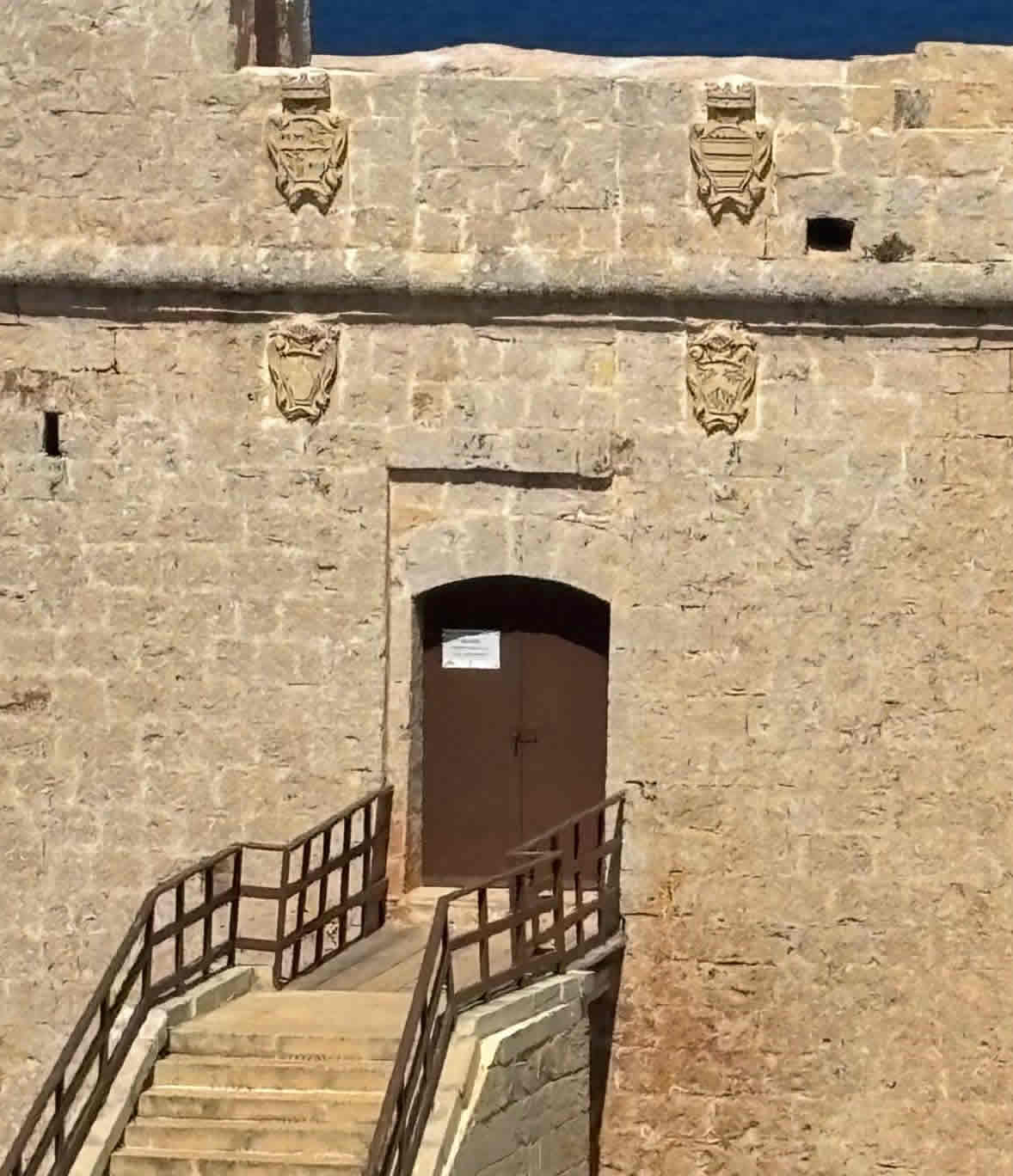
The tower was deliberately placed in a remote and elevated position. Its entrance was above ground level and was reached by an external staircase and drawbridge. When raised, the drawbridge fitted into a recess in the wall, helping to protect the entrance from attack.
The location also meant that reaching the tower with building materials and carrying out repairs was difficult. Its restoration in the modern period therefore required considerable work by hand.
Ta’ Isopu is a relatively small square tower with thick, battered walls that slope inward as they rise. Its construction is related to the Lascaris towers at Xlendi and Dwejra, although Ta’ Isopu has its own distinctive features.
Inside, a high barrel vault forms the principal upper space. An intermediate floor rests on springing arches, while a spiral staircase provides access between the levels and to the roof.
The main doorway was particularly elaborate for such a small defensive building. Four escutcheons were placed around the entrance, representing the Order and important figures connected with the tower and Gozo.
Ta’ Isopu was initially left without permanent artillery. This was unusual among Gozo’s coastal towers and reflected its administrative relationship with the Università rather than direct control by the Order’s artillery authorities.
By 1792 the tower had been rearmed with four six-pounder iron guns. Records also indicate a small gun crew, allowing the tower to play an active role in the defence of the coast.
Ta’ Isopu has a unique place in Gozo’s military history because its guns actually opened fire on the approaching French fleet during the French invasion of 10 June 1798.
French troops were landing in the area of Daħlet Qorrot, within range of the tower. The guns of Ta’ Isopu joined the fire from the nearby coastal defences as the French boats approached the shore.
This makes Ta’ Isopu the only known Gozo watchtower whose guns engaged the French invasion fleet. The episode gives the tower an unusually well-defined final chapter in the military history of the Knights of St John.
Following the French occupation of Malta and Gozo in 1798, the old coastal defence system gradually lost its original purpose. Ta’ Isopu survived, but over the following generations the tower was no longer maintained as an active coastal gun position.
Like several other historic towers in Gozo, it eventually suffered from weathering, neglect and the loss of parts of its interior.
By the early twenty-first century Ta’ Isopu Tower was in poor condition. The interior had largely collapsed and the original staircase was no longer intact.
A major restoration was carried out between 2003 and 2006 by Din l-Art Ħelwa, working with the Nadur Local Council. The restoration was undertaken largely by local master mason Leli Saliba, known as “il-Bufajra”, and his son.
The spiral staircase was reconstructed and the roof rebuilt using the surviving original arch as a guide. The result preserves the tower as one of Gozo’s most important surviving examples of seventeenth-century coastal defence.
The tower occupies the ridge between two very different coastal landscapes. To one side lies San Blas Bay, while Daħlet Qorrot lies below the cliffs on the other.
Its position explains the importance of the site: the tower could watch both coastal approaches while remaining high enough to communicate with other defensive positions.
A secluded Gozo bay below the tower, reached by a steep path through the surrounding countryside.
Explore San Blas →A small rocky inlet and traditional coastal landscape beneath the ridge on which the tower stands.
Explore Daħlet Qorrot →See how Ta’ Isopu formed part of Gozo’s wider seventeenth-century coastal warning system.
Explore Coastal Towers →Ta’ Isopu stands in a relatively remote position above the countryside between San Blas and Daħlet Qorrot. The tower is reached from the nearby road and parking area by an uneven track and walking route.
The approach is exposed and can be rough underfoot. Suitable footwear, water and care on the surrounding rocky ground are recommended.
The tower is managed by Din l-Art Ħelwa and has been opened to visitors on selected occasions. Opening arrangements can vary, so check current information before planning a visit specifically to enter the building.
Ta’ Isopu Tower was built in 1667 during the reign of Grand Master Nicolas Cotoner.
It is also known as Sopu Tower, San Blas Tower, Torri ta’ Isopu and La Torre Nuova.
It was the last coastal watchtower built on Gozo by the Knights of St John and it has a unique place in history because its guns fired on the French invasion fleet in 1798.
By 1792 the tower had been armed with four six-pounder iron guns.
Yes. Its guns opened fire on the approaching French fleet during the invasion of Gozo on 10 June 1798.
The major restoration was completed between 2003 and 2006, restoring the interior, staircase and roof.
Continue exploring Gozo’s coastal towers, countryside and historic coastline.