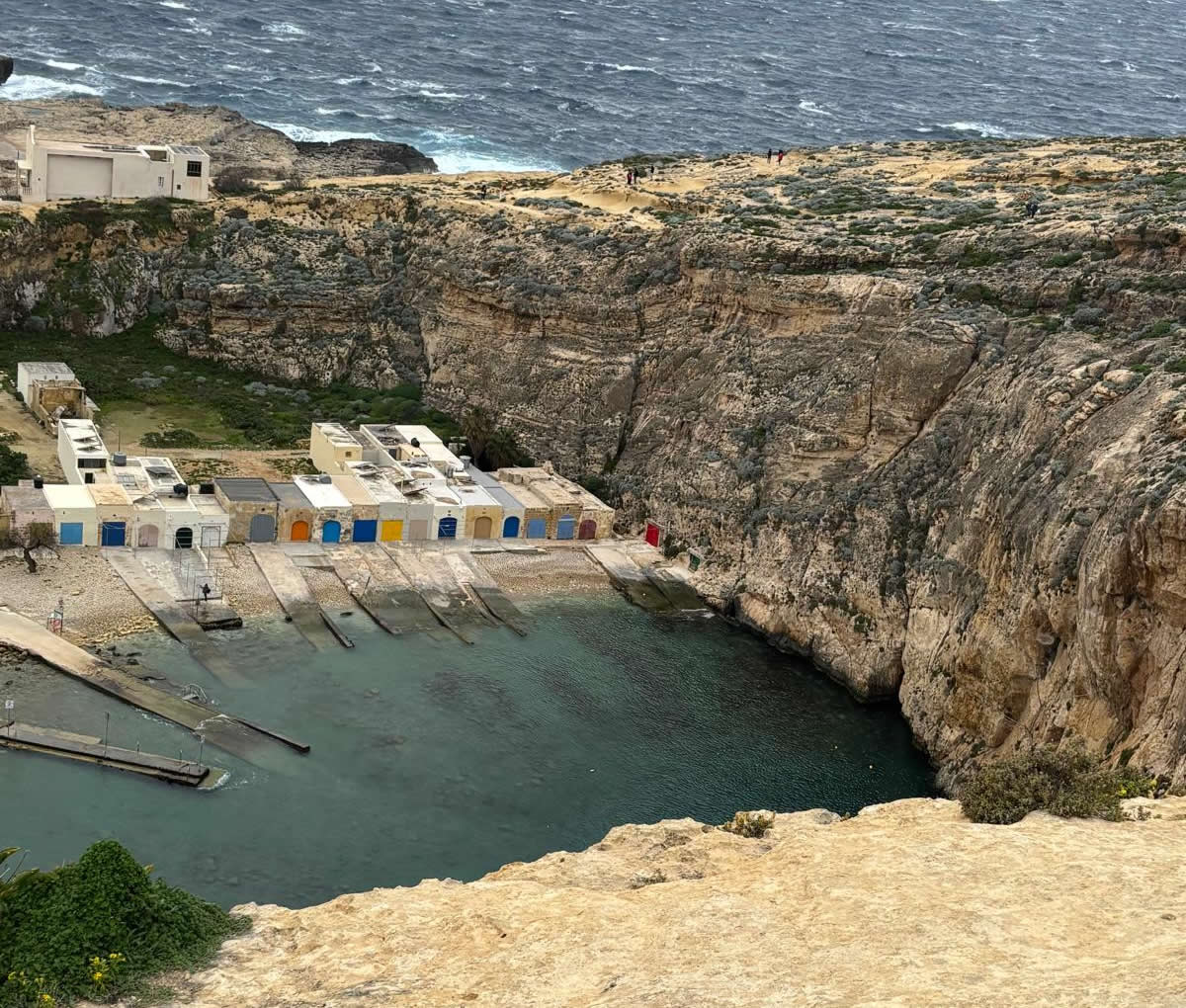
Diving the Inland Sea
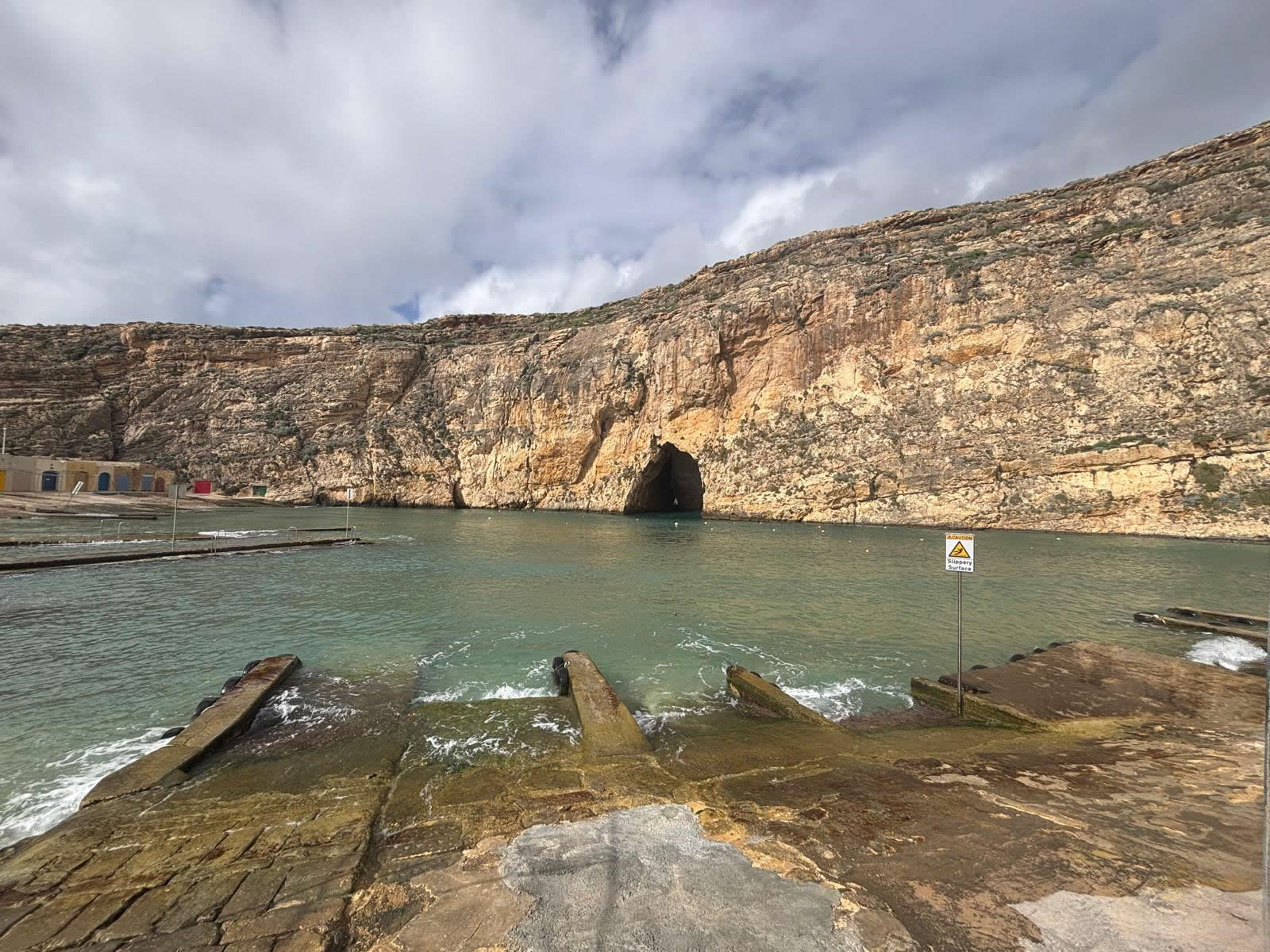
The Inland Sea at Dwejra is one of the most distinctive dive sites on Gozo. A shallow seawater lagoon lies inside the dramatic limestone coastline and is connected to the open Mediterranean by a natural tunnel through the rock.
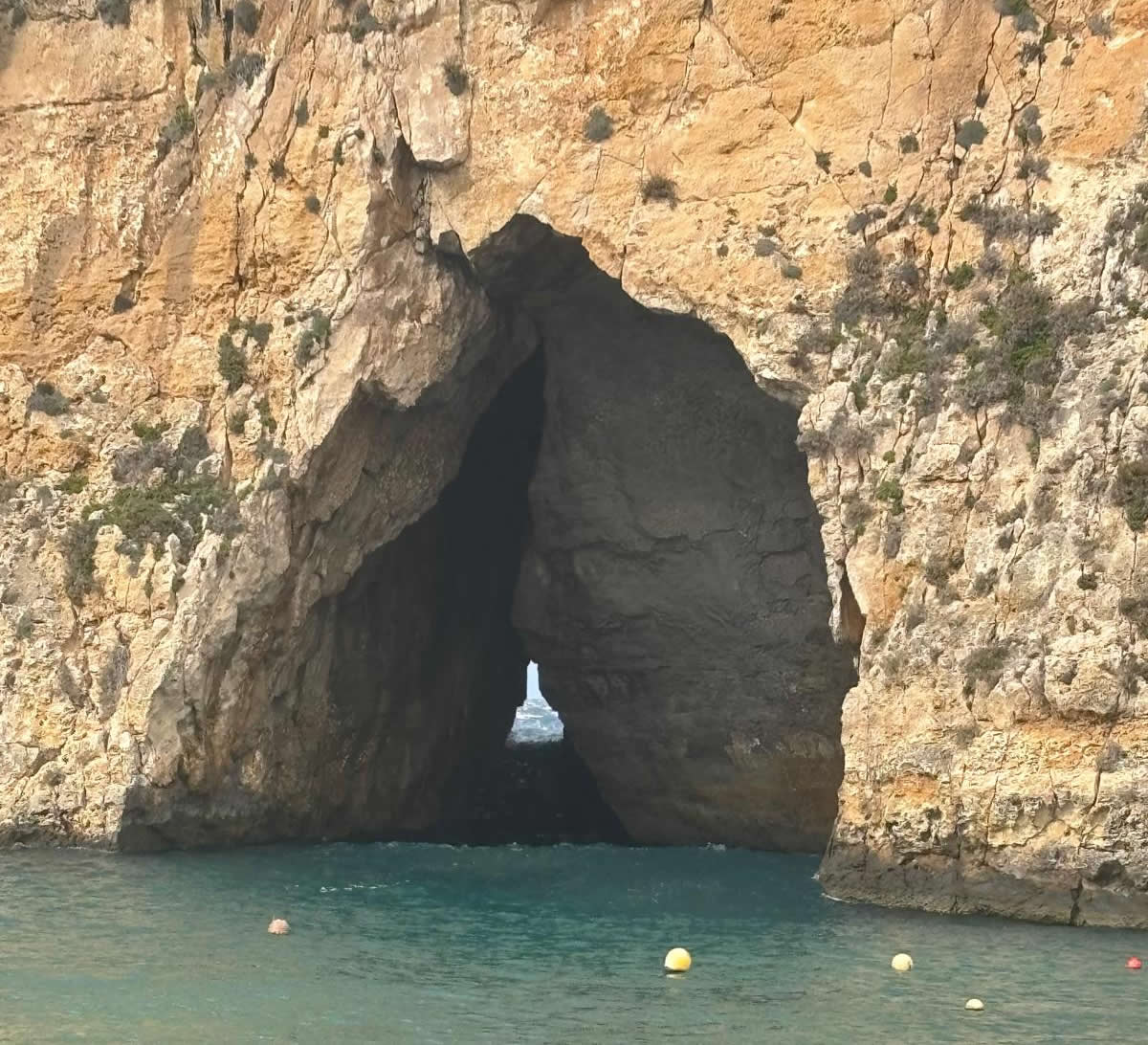
For divers, the tunnel is the main attraction. The passage is approximately 80 metres long and begins in relatively shallow water before descending progressively towards its seaward exit. As the diver moves through the darker interior, the opening to the Mediterranean appears ahead as a bright blue window.
Once outside the tunnel, the dive opens into the deeper waters around Dwejra. Vertical limestone walls, fissures, overhangs and caves provide a very different environment from the sheltered lagoon. The area is also known for its marine life and dramatic underwater scenery.
The Inland Sea Tunnel
The lagoon is very shallow, but the tunnel floor drops quickly after entering the passage. Published dive-site descriptions place the seaward end of the tunnel at approximately 25–26 metres. Beyond the tunnel, the outer seabed and reef walls continue to much greater depths.
What makes this dive special?
The Inland Sea is particularly memorable because the dive changes dramatically as it progresses. The calm, shallow lagoon gives way to the enclosed tunnel, where the available light becomes more subdued. Looking back towards the lagoon or forward towards the open sea creates some of the most striking natural light effects at Dwejra.
At the far end of the tunnel the blue Mediterranean opens out in front of the diver. The surrounding reef contains vertical faces, ledges, cracks and caves that can be explored according to the planned dive and the diver's qualification.
The Inland Sea can also be combined with other Dwejra dive sites when conditions, gas planning and the diver's experience allow. The nearby Gozo diving directory will be expanded with individual pages and photographs for the island's major sites.
Marine life
The walls and reef around Dwejra provide shelter for a variety of Mediterranean marine life. Depending on season, visibility and conditions, divers may encounter octopus, moray eels, groupers, bream and other reef species. The shaded tunnel walls also provide a habitat for sponges and other marine organisms.
Marine-life sightings are never guaranteed, but the combination of rock formations, clear water and unusual lighting makes the site particularly attractive to underwater photographers.
Dive site information
| Feature | Information |
|---|---|
| Site | Inland Sea & Tunnel |
| Area | Dwejra, Gozo |
| Maltese name | Il-Qawra |
| Coordinates | 36.053683° N, 14.191077° E |
| Entry | Shore entry |
| Dive character | Tunnel, cave, reef and wall |
| Average depth | Approximately 18m for the dive profile |
| Tunnel length | Approximately 80m |
| Tunnel exit | Approximately 25–26m |
| Maximum depth | 40m+ depending on route, qualification and dive plan |
| Recommended level | Advanced Open Water or equivalent for the full tunnel/outer-wall route |
Depth figures vary between published dive guides because different routes around the tunnel and outer reef are included. Always plan within your certification and current dive conditions.
Photographs
Location
The Inland Sea is at Dwejra on the western coast of Gozo. This sheltered lagoon is connected to the open Mediterranean through the natural tunnel beneath the limestone cliffs.
Location & Map
The Inland Sea is located at Dwejra on Gozo's western coast, close to the Blue Hole and the former Azure Window. The dive begins in the sheltered lagoon before following the natural tunnel towards the open sea.
Inland Sea diving FAQ
How long is the Inland Sea tunnel?
The natural tunnel is approximately 80 metres long, connecting the shallow Inland Sea lagoon with the open Mediterranean.
How deep is the Inland Sea dive?
The lagoon is shallow. The tunnel starts at only a few metres and descends progressively, reaching approximately 25–26 metres at the seaward exit. The outer reef can continue much deeper.
What level of diver is recommended?
The full tunnel and outer-wall route is best regarded as an Advanced dive. The overhead-style environment, reduced light and increasing depth require good buoyancy, awareness and planning.
Can the Inland Sea be dived from shore?
Yes. The site is a shore dive, beginning in the sheltered lagoon before continuing through the natural tunnel.